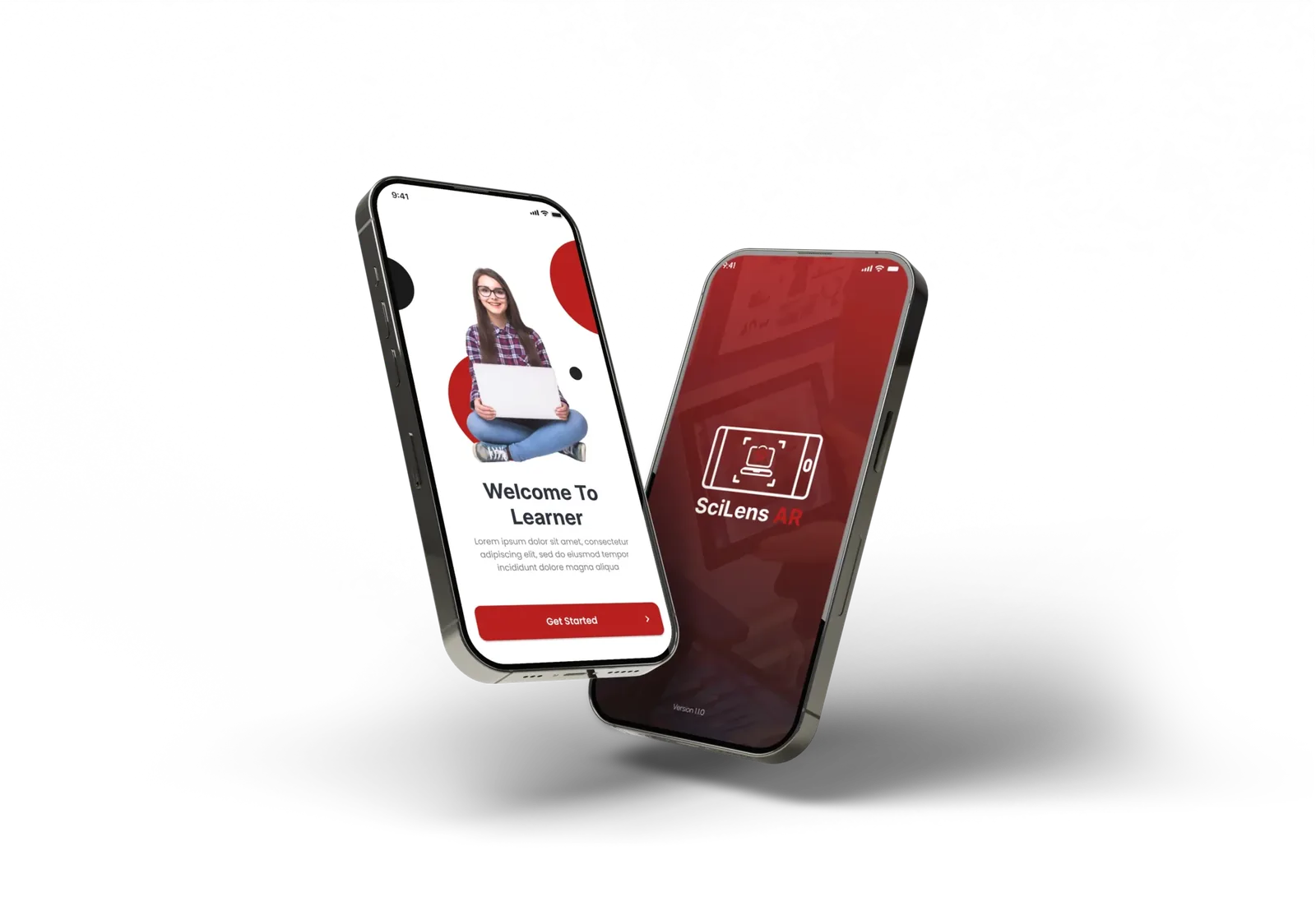
App Vertices built AR Learn Lab, an interactive mobile app that uses Augmented Reality to bring science concepts to life—enabling students to run virtual experiments, explore 3D models, and boost learning outcomes with quizzes and curriculum-aligned content. Our client is a Houston-based science coaching center focused on helping middle and high school students, including homeschoolers, gain a deeper understanding of scientific principles. With a strong commitment to academic excellence and modern teaching methods, the center wanted to bridge the gap between traditional classroom teaching and technology-driven learning experiences. They were looking for a long-term digital solution that could enhance engagement, reduce reliance on physical labs, and offer safe yet immersive science education—accessible from anywhere.
Interactive Learning: Core Objectives Behind SciLens AR Learn Lab
Immersive 3D Science Education
Bring core scientific concepts to life using Augmented Reality. The app delivers interactive 3D content for biology, chemistry, and physics topics to simulate experiments virtually.
Concept Retention & Assessment
Support concept retention through real-time assessments and quiz modules mapped to school-level curricula and academic levels.
Reduce Reliance on Physical Labs
Provide a safe, virtual experiment platform accessible anywhere, eliminating the need for expensive and hazardous physical lab setups.
From Curriculum to AR Canvas: The Development Journey
Discovery & Curriculum Analysis
Collaborated with educators to map the biology, chemistry, and physics topics directly to curriculum standards (such as TEKS for Texas students) ensuring academic accuracy.
3D Asset Optimization
Designed and optimized highly detailed 3D models of science concepts in Blender, ensuring they load efficiently on standard mobile devices without performance lag.
Unity & AR Integration
Integrated Unity3D with the Vuforia SDK to create stable, responsive marker-based and markerless AR triggers for virtual experiments.
Interactive Flow Design
Built step-by-step experiment prompts, voice narration for audio learning, and a dashboard for progress and quiz score tracking.
QA & Pilot Launch
Conducted intensive testing on iOS and Android devices, followed by an initial MVP rollout to science coaching center students.
Tech Stack Engineered for Immersive Education
Results & Impact: Redefining Classroom Science
Assessments showed a marked improvement in comprehension and test scores after students began using the virtual experiment simulator.
Students frequently accessed the app outside class hours, indicating high curiosity and self-driven study patterns.
Educators reported higher class participation, and parents praised the app's safe approach to conducting lab experiments at home.